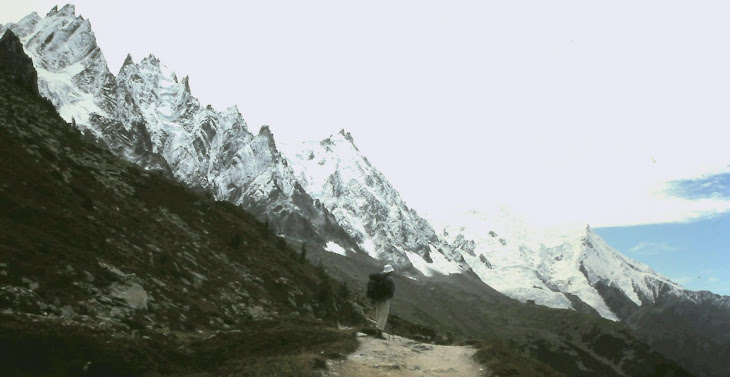
'...this I have resolved on, to wit, to run when I can, to go when I cannot run, and to creep when I cannot go.'

Saturday, 25 September 2010

Dr Ernest Kevan


Today I came to the end of writing a biography of Ernest Kevan, the first Principal of London Bible College. The first draft was completed not far off a year ago, but new information, a different approach and a rigorous (I hope) attention to clarity and style has meant that it was not finished earlier. Of course, I have had one or two other things to do over the past months as well. Whether what I have written will ever be seen in book form depends on whether it is published, but I would like to think it will be. It is now 45 years since Kevan died and he is unknown to many Christians today and only a name to many others. Most of us who were at LBC in his day thank God for him and his influence upon our lives. For many reasons he deserves to be better known than he is. Canon Frank Colquhoun wrote this about him: ‘He was beyond question one of the truly great Evangelicals of our day. Others will, I am sure, write more fully about him as scholar, teacher, administrator, and leader of men. For my part I like to recall that, with all his rich and varied gifts, he was at heart a very simple Christian believer, a humble man of God, and a most lovable and gracious friend.’

Thursday, 23 September 2010

Not too pleasant...

On Tuesday I made my way to the Royal Lancaster Infirmary for a colonoscopy. For the uninitiated this involves an examination of the colon by the insertion through the anus of a narrow tube with a light at the end and the ability to excise and remove any polyps that are found. Though there are more congenial ways of spending an hour than lying like a fish on a slab watching your innards on a screen I am very grateful for the medical care I have received over the past 11 years. It was at the end of 1998 that my brother phoned me to say that he had rectal cancer. After many operations, much pain and great bravery he died four years ago. Just 2 or 3 months after his phone call I had some bleeding which I put down to piles but, with his example in mind, I went to the doctor to check things out. Now, 5 colonoscopies and several other procedures later, all is well, because though I seem to produce polyps regularly, some of which could turn cancerous in time, they are discovered and removed before they can become harmful. As bowel cancer comes in men’s top ten health threats it as well to be forewarned and to check out any possible symptoms. (I wondered about including a picture, but decided against it!)

Thursday, 16 September 2010

Pope and faith

So the Pope has arrived in Britain and the Coalition government ‘do God’ and recognizes the importance of faith, though presumably Nick Clegg is an exception. Should we be sceptical or thankful? Perhaps a qualified thankfulness is called for. The Bible has no knowledge of Popes and there is much of the Pope’s teaching that no-one who believes the Bible can recognize as Christian truth. But he does stand out clearly against the militant secularism of our day and has clear views on the morality that befits human beings, and in this he contrasts with the mealy-mouthed clerics that we are more used to in this country. As far as faith is concerned the statements have not been very helpful. Everyone has faith; atheists believe that God does not exist. Faith in itself is nothing, it may make us feel better, but that can be a delusion. What counts is what, or rather, who we believe. To believe in fairies has no value; in fact it wouldn’t have even if they existed unless they have powers to help us in some way. The only true object of faith is Jesus Christ and mercifully those who truly believe in him are saved and brought to God in spite of being muddled on other points. Perhaps, just perhaps, the events of these days will mark a shift in the relentless secularism and hedonism of our country and perhaps, just perhaps, this will create an opportunity for the gospel. Let’s pray that it will.

Tuesday, 31 August 2010

Peace...


Yesterday afternoon we walked along the bank of the river Lune, (after all it was a Bank Holiday!). It was a beautiful day; bright sunshine with contrasting white clouds hovering over the hills. Ahead Ingleborough stood clear, but shaded; not the brooding presence it sometimes seems to be, rather the benign guardian at the head of the valley. A buzzard circled high above, and four swans moved leisurely upstream, dipping their heads under the water in unison. A crested grebe perched on a rock hidden just below the surface while another raced downstream to join it. Twice we saw a kingfisher skim across the water, just below the bank, out of sight of all except those walking quietly by the edge. Most of the people going up and down had dogs with them, or possibly it was the dogs that had people with them. We walked across grass and through woodland, returning the same way. In places the river was patterned and chattering as water ran over shallow rocky sections, in other places it appeared still and utterly calm. No wonder Isaiah speaks of ‘peace like a river’ (48:18; 66:12).

Saturday, 21 August 2010

You set me thinking, Gary

Gary Benfold, on his blog, has bewailed the number of preachers going from Britain to the United States, mentioning Mark Johnston as the latest to do so. I commented that up here near Lancaster the cry usually is that preachers, or potential preachers, tend to go south. This is partly because young men go south (or southwest) to train, to LTS or WEST. They then preach in the south and get called to a church in the south. Gary has, I think, taken in good part my comment about him travelling south to Bournemouth. Of course we both know that we seek honestly to follow the guidance of the Lord in these matters.

Nevertheless, I think there are a number of problems. I know a church 30 to 40 miles from here, now happily settled with a South African pastor, that, during the inter-regnum, had several men preach from the south who ceased to show any interest as soon as they saw the town and the environs of the church building. I think there still is a need in the north. When we moved from Stoke-on-Trent to Dunstable I said at my induction: ‘From time to time it has been my privilege to minister in more northerly regions than North Staffordshire, and I almost feel a sense of guilt in coming so far south when the needs are so great in the north. I bow to the hand of the Lord in this, but trust I will remember to pray for the churches and brethren in the north of England.’

Gary was actually concerned about the situation in London, and I identify with that also. Our capital city, bursting with people from all over the world, is not well-served with evangelical Reformed churches. This is not to under-estimate the good work being done by some, but I think it must be a hard graft in many areas of London today. Sometimes I think that because of our Independency and fragmentation there is no overall strategy, though I would not want to deny that the Lord has a strategy. I sometimes think we focus too much on the soft targets: students and ‘nicer’ people in ‘nicer’ areas. I think there is also a problem about our understanding of the local church – but that must be for another occasion, as it requires me to do some more work on the biblical perspective. These are just almost random thoughts, but Gary has set me thinking on what I think is a rather important matter.

Monday, 16 August 2010

Education, education, education

Beginning to read Gresham Machen's 'Christianity and Liberalism' I was startled to read this paragraph, so I post it here:


A public-school system, if it means the providing of free education for those who desire it, is a noteworthy and beneficent achievement of modern times; but when once it becomes monopolistic it is the most perfect instrument of tyranny which has yet been devised. Freedom of thought in the middle ages was combated by the Inquisition, but the modern method is far more effective. Place the lives of children in their formative years, despite the convictions of their parents, under the intimate control of experts appointed by the state, force them then to attend schools where the higher aspirations of humanity are crushed out, and where the mind is filled with the materialism of the day, and it is difficult to see how even the remnants of liberty can subsist. Such a tyranny, supported as it is by a perverse technique used as the instrument in destroying human souls, is certainly far more dangerous than the crude tyrannies of the past, which despite their weapons of fire and sword permitted at least thought to be free.

Monday, 26 July 2010

A question of proportion

I have had to put my reading of John Howe's 'The Blessedness of the Righteous' on hold because of a family visit, but I had time to read some this morning. I have finished the exposition and doctrine (155 pages) and this is how John Howe begins the next section: 'And now is our greatest work yet behind; the improvement of so momentous a truth, to the affecting and transforming of hearts; that, if the Lord shall so far vouchsafe his assistance and blessing, they may taste the sweetness, feel the power, and bear the impress and image of it. This is the work both of the greatest necessity, difficulty, and excellency, and unto which all that hath been done hitherto is but subservient and introductive.' There follows another 211 pages. Makes you think, doesn't it?